
The Problem with Purpose
Purpose is Overrated - Practice is What Matters

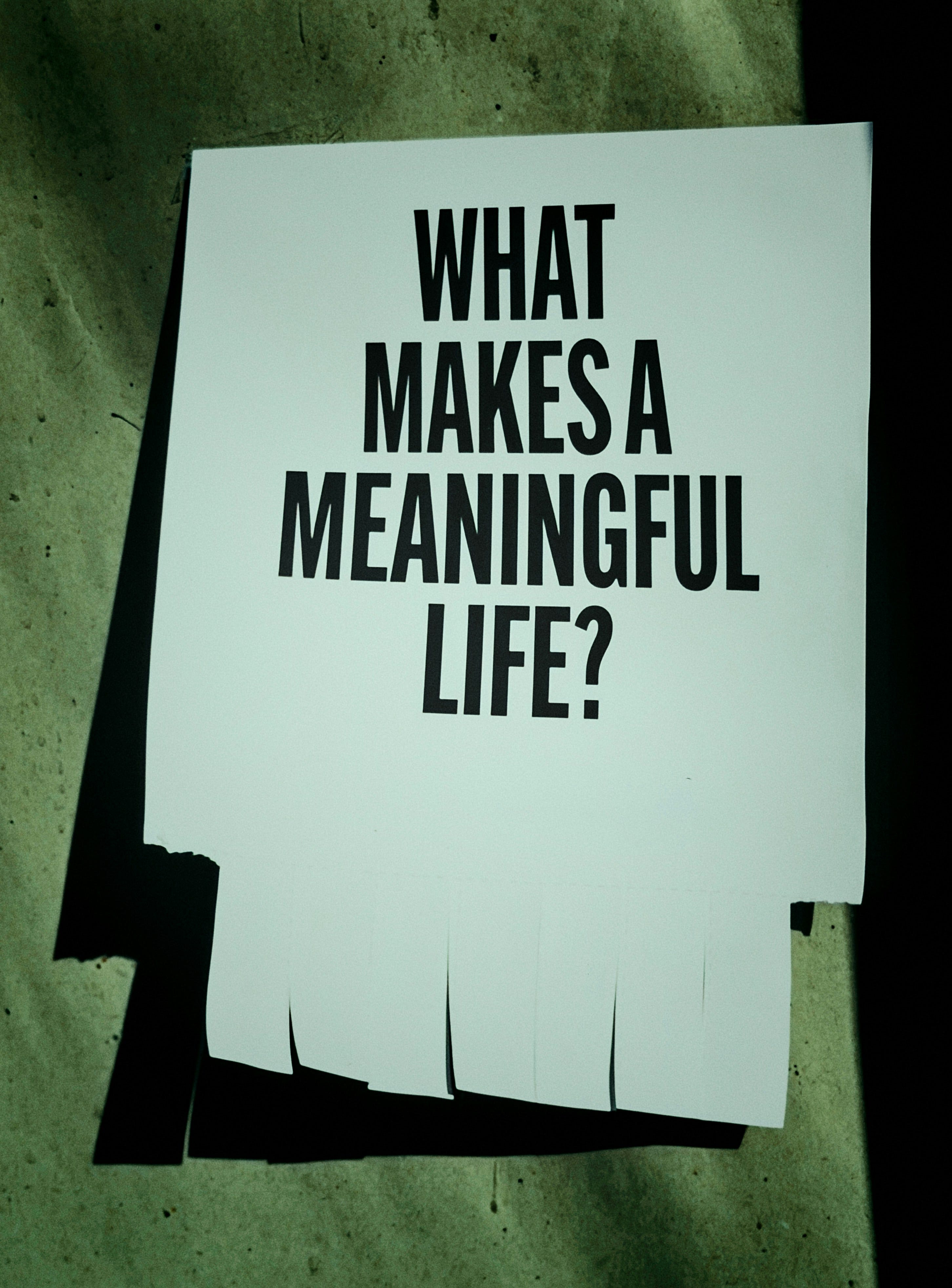
Photo by Jon Tyson on Unsplash
When I started my career as an organizational consultant, the idea of a personal or organizational purpose was at best misunderstood and more usually it didn’t enter into the conversation at all. When the purpose was discussed, it was conflated with goals, which are in many ways the antithesis of purpose.
Purpose is an idea of a possibility to which one is committed. A comparable term would be Vision. Both purpose and vision have no endpoint – they are ongoing, and the event horizon called achieving the purpose keeps moving away as we approach. Goals or aims are finite – they mark an achievement that will, someday, be accomplished.
In his book Finite and Infinite Games, the philosopher and theologian James Carse makes this distinction – an infinite game is one that has no winning or losing, and no end; it is played for the sake of playing. A finite game is one that is, at some defined point, won or lost. Thus, Baseball is an infinite game; a baseball game is a finite instance of the larger, infinite game. Quantum Physics is an infinite game; formulating a “theory of everything” is a finite achievement within the game of Quantum Physics.
Another way of looking at it is that infinite games are contextual – they define a field of endeavor that sets the parameters for finite games that advance the infinite game. Purpose is an infinite game; goals are finite. If my purpose is to create a world that is just and fair, I may create a goal to end violent communication – the goal is consistent with the purpose. If I create a goal to become an expert on wines, that goal would not fit with my purpose, even though it might be a useful and interesting thing to do, and might even further some other purpose I have.
Today, purpose and vision are common terms in life and in business, though the conflation with goals remains as a misunderstanding. Go on the website for almost any company in any field, and you will find posted the company’s vision or purpose. For example:
McDonald’s
Our purpose is to feed and foster communities.
General Motors
Zero crashes, zero emissions, zero congestion.
Wells Fargo
To satisfy our customers’ financial needs and help them succeed financially.
NatureSweet
Our mission is to transform the lives of agricultural workers in North America through a profitable business model that encourages other companies to replicate.
Kroger
Our Purpose is to Feed the Human Spirit.
Each of these companies, indeed every company, has goals – quarterly, annual, and even longer-term – that they seek to achieve in service of their purpose.
All of that is well and good, even noble, but too often purpose becomes a wall poster rather than a living presence for the company in the fact of the day to day exigencies of business life. When purpose becomes a motto it often masks anxiety, identity confusion, or the avoidance of hard choices.
By its nature, purpose creates a bounded field of play and requires choices. Purpose that doesn’t drive behavior is not purpose, it’s preference. McDonald’s purpose led in the 1980’s to a hard choice between continued rapid expansion and making their products better and more affordable in the communities they were already serving. NatureSweet is in the business of growing tomatoes, but their purpose led them to set a goal of every worker being able to afford housing.
In both these examples, the “why” of purpose led to “whom,” as in “for whom do I take responsibility?” To be meaningful, purpose has to be grounded in reality, not ideals.
Purpose is necessary, but not sufficient. To be effective, purpose must be tied to ethical practices. Leaders don’t lack purpose, they lack disciplined behavior aligned with it. Without this, purpose becomes branding or performance. Organizations execute purpose through culture – practices, habits, incentives, and how power dynamics are managed. Purpose that is commoditized into books, speeches, brand statements, certifications, etc., becomes safe, non-threatening platitudes.
In the absence of ethical practices, “purpose” can be used to justify overwork, underpay, and exploitation as leaders weaponize purpose to extract discretionary effort, and employees self-exploit because “the purpose makes it worth it.”
The problem isn’t lack of purpose, it’s lack of courage. When the choices get tough, when they threaten revenue, status, or comfort, leaders keep “refining” purpose instead of living it.
So purpose counts, but practice is what matters. Purpose is contextual and abstract; practice – disciplined, ethical behavior aligned with purpose is what translates purpose from the abstract to difference made in the real world.
Want more of this kind of thinking? Check out the Practitioners Studio at https://ilumn8.life/op/the-practitioners-studio/